



An engineering maestro who orchestrates technical innovation for one of the world’s most iconic automakers. An Internet interaction expert who helps make Google go. A much-beloved interior designer dedicated to bringing affordable style to the masses. These are just a few examples of Georgia Tech alumni making an indelible impact in the world of design. Read their stories below and marvel at some of their most recent work.
Franco Cimatti, ME 81
Automotive Designer, Ferrari SpA
Over the last two decades, there’s perhaps been no more influential force on Ferrari vehicle designs than Tech alumnus Franco Cimatti. As director of vehicle concepts and pre-development for the famed Italian automaker, Cimatti holds a legacy that hit high gear in the mid-1990s when he took the lead on designing the Ferrari 360 Modena—which uncoincidentally bears the same name as his birthplace.
Cimatti supervises a team of engineers and designers charged with developing new vehicle architecture and technologies upon which the Ferrari business plan revolves. “We investigate high-level, strategic directions, as well as detail decisions in terms of performance specifications, space allocations and design solutions,” Cimatti says.

His body of engineering and design work is astounding: Cimatti explored a pronounced rear-biased weight distribution with a mid-front engine, transaxle layout in the 2004 Ferrari 612 Scaglietti; developed a new dual-clutch transmission, suspension geometries and a retractable hard-top for the 2008 California; patented Ferrari’s first all-wheel-drive transmission on the 2011 FF; and pushed physics-based design integration to the extremes on the radical, hybrid 2013 LaFerrari.
Two fundamental principles drive Cimatti’s approach to automotive design. “The first is to explore and generate feasible ideas for functional and performance aspects that may be obtained by basic physics such as weight, weight distribution, position of center of gravity, inertia properties, aerodynamics and the like,” he says. “And to that end, I try to minimize parts count and size as much as possible.”
The second is perhaps even more important: to maximize the interaction between human and machine. “Vehicle control should be natural and enjoyable, the feedback from vehicle to occupants appreciable, and life on board our vehicles a remarkable experience,” Cimatti says.

As you can imagine, it takes a tremendous amount of effort to bring a Ferrari from original concept all the way to dealers’ showrooms. And that’s why such work takes not only a strong design team, but also a close relationship with other design and production partners in the business, Cimatti says.
“My team devotes a considerable portion of its time to hands-on engineering design work and preliminary calculations,” he says. “At later stages, when single vehicle model development starts, our work becomes the engineering input on the automobile’s aesthetics, and the technical feasibility of the desired styling. We also coordinate all vehicle technical specifications and development right up to production launch.”
Vern Yip, MBA 94, M Arch 95
Interior Designer, Vern Yip Designs
Bursting into people’s homes on a hugely popular home-improvement show back in 2001, Vern Yip quickly became one of the world’s most famous—and relatable—faces in interior design. “My entire career has been about making design accessible for everyone, and TLC’s Trading Spaces was the first vehicle for sharing my philosophy with a wide audience,” Yip says. “And people really connected with it. I never expected to be a celebrity designer.”
Though such democratization of design was not in vogue among his peers, Yip saw a lot of value in it. “You shouldn’t have to be on the top rung of the socio-economic ladder to be able to afford and enjoy great design,” he says.
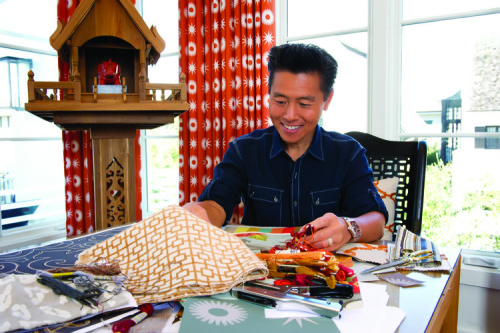
Though he’s had several very public vehicles for sharing his expertise and enthusiasm, including later shows such as NBC’s Home Intervention and HGTV’s Design Star and Deserving Design with Vern Yip, the Tech alumnus still runs his own design company in Atlanta. With far-flung business interests, Vern has taken advantage of both his MBA and master’s in architecture from the Institute.
“The most important things I learned during my time at Tech were how to work hard and juggle multiple projects—I’ve never been so tired in my life,” he says. “I was forced to think more critically with the left side of my brain to balance out my right-brain creativity. Today, that’s a necessary balance for my work as both a designer and businessman.”
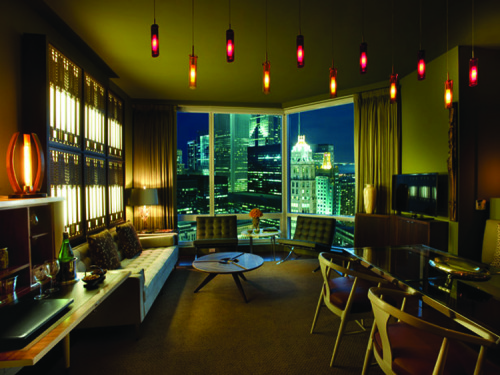
One of Yip’s latest projects was building his dream home, a Dutch Colonial-style beach house located in a New Urbanist settlement in Florida that embraces a community-centered lifestyle. “It’s the perfect place to raise my two kids, and the perfect place to showcase all the furniture and design items I’ve accumulated over the years and through my travels to 46 different countries,” Yip says. (The house recently was featured on an HGTV special called Live in Vern’s House.)

The award-winning designer also just launched last month a new line of colorful, contemporary fabrics—dubbed Vern Yip For Trend—adding to a long list of product lines and endorsements for companies over the years such as Stainmaster carpet, Moen faucets, Procter and Gamble, Best Buy and others.
Jennifer Moore, BME 05
Medical Implants and Instruments Designer, K2M
Believe it or not, Jennifer Moore knew at the tender age of 12 that she wanted to be a biomedical engineer. “Specifically, I wanted to design and improve knee and hip joint replacements,” Moore says. “I was an avid athlete and always thought orthopedics would be an apt career.”
When it came time for college, the Alpharetta native took the traditional prescription for a career in medicine. “The plan was to study biomedical engineering at Tech, move onto medical school, become a doctor and see where that took me,” Moore says. However, while working on a biomechanics class project at Tech—in which she designed a highly accurate blood pressure measurement device—she fell even harder in love with design and decided to focus solely on it.

Today Moore works at K2M Holdings, a global medical device company, where she serves as a project engineer and oversees the design of a diverse range of complex spinal im-
plants and the instrumentation used to implant them. She has helped develop products aimed to alleviate pain and improve the quality of life for a wide range of patients, ranging from those suffering from adolescent scoliosis (rare and risky) to vertebral degeneration (fairly common).
“When designing a new implant, I have to research the intellectual property that is out there, and also research what doesn’t exist yet,” Moore says. “My fellow designers and I work closely with a board of surgical advisers, and together we look for ways to make our implants—and the surgeries themselves—better.”
In that regard, Moore has to serves two very different clients: the patients themselves, and the physicians who perform the surgeries.
“We strive to design the best instrumentation in the industry,” she says. “We work hard to make it easy for doctors to implant the devices quickly and efficiently.”
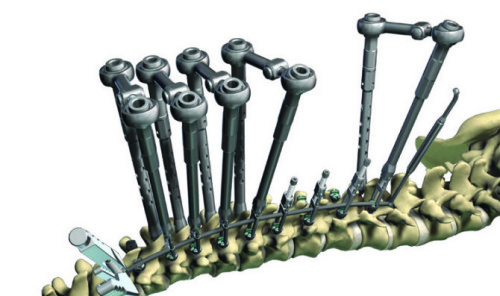
Doctors also demand form as well as function from the implants, whether they’re interbodies (that hold open vertebrae) or cervical plates. “Aesthetics do play a fairly large role in their design,” Moore says. “Physicians want implants that are sleek and attractive, and that look and feel high quality.”
That’s not the only challenge in developing the devices. Like prescription drugs, spinal implants have to pass rigorous FDA testing. “It’s a complex process that takes a good amount of time,” Moore says. Another challenge is designing for scale. “Most implants will be mass produced in a variety of sizes, so they have to work and be cost effective throughout while maintaining the highest quality.”

Brad Reese, ID 04
Toy Designer, Kids II
Brad Reese has been balancing his inner child with his inner designer his whole life. As a kid, Reese was obsessed with model building, doodling and creating things, and he even took an early architecture class just so he could learn how to construct intricate balsa-wood structures.
Fast forward a few decades, and Reese is still at it. Today the Tech grad works as director of industrial design for Kids II, an Atlanta-based manufacturer of infant toys and gear. He currently manages a team of designers for some of his company’s notable brands, including Bright Starts and Baby Einstein, but he spent his first 10 years at Kids II as a toy designer himself.

“I’m not going to kid you, making toys for a living is a lot of fun,” Reese says. “But it’s more challenging than most people realize. For one, it’s highly regulated in terms of safety, and closely scrutinized by not only government agencies, but also retailers, parents and child safety advocates.”
Reese says the toy industry is also extremely competitive and fast-paced. “Unlike some industries where a company is expected to introduce only a couple new products a year, we’re designing and putting dozens of new products into the marketplace annually,” he says.
Perhaps the biggest challenge of his job is designing for parents. “It’s especially critical to understand parents’ motivations and tastes, because they’re the ones actually buying the toys,” he says. “Unfortunately, toy aisles bombard them (and their kids) with sensory overload. You have to have an attractive color scheme, unique appealing product forms and good packaging or you might get skipped over.
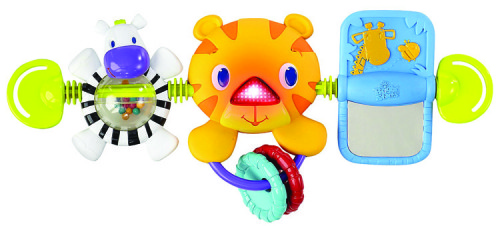
“As you can imagine, we conduct a lot of research—focus groups, shop-alongs, in-home play sessions—to ensure we’re making toys that both kids and parents are happy with,” Reese says. For the child, it’s mainly about the playability, entertainment and learning they get from the toy, he says. For the parent, in addition to safety it’s also largely about ease of use.
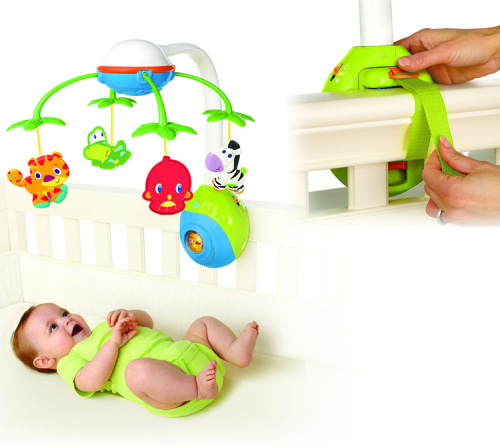
“Case in point: a Bright Start crib mobile I helped design featured a new way to attach it to any size crib,” Reese says. “That made the mobile very portable and popular with the adults who had to install it.”
Alan Harp, ID 88, M ID 01
Furniture Designer
It took Alan Harp a lot longer to “get out” of Tech than most graduates—not because he struggled with his coursework, but because after finishing his bachelor’s degree, he stayed put, taking a job as a designer for the College of Architecture’s Center for Assistive Technology and Environmental Access (CATEA).
“Alongside some extraordinary teammates, I spent 13 years designing, building and delivering hundreds of custom devices, products and furniture pieces to help people with disabilities,” Harp says. “As you can imagine, the work was very fulfilling because I could directly see the impact of my work on individuals’ lives.”
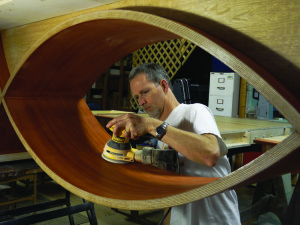
In 2001, Harp transferred to the College of Architecture’s newest research center and helped set up the Advanced Wood Products Laboratory (now the Digital Fabrication Lab), where he taught wood technology and furniture design to budding architects and industrial designers for 10 additional years. “I felt like a kid in a candy store because we had access to one of the most amazing wood shops in the world.”
All that time teaching and helping others make furniture finally inspired Harp to step away from Tech and start his own custom furniture business in 2010.
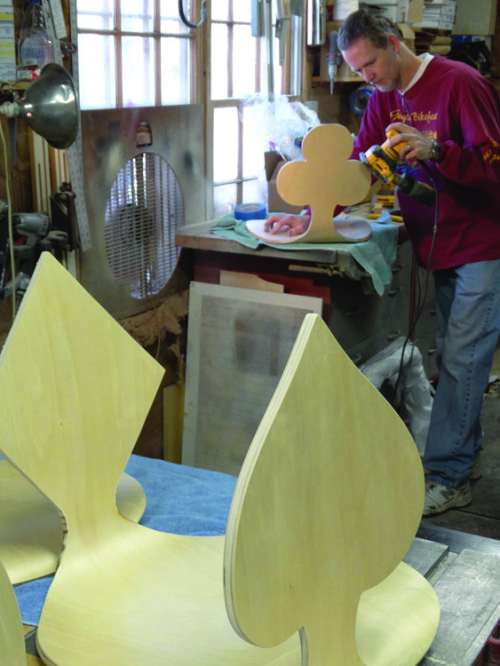
“I never planned to be a furniture designer,” he says. “It was mostly a progression of happenstance and opportunity. But once I founded my company, I did so with the goal of creating custom pieces that hadn’t ever been built before.”
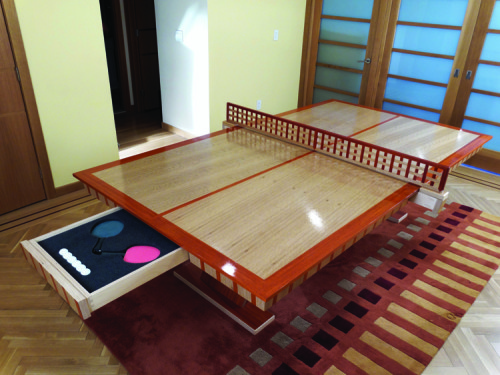
Harp works with clients one-on-one to build exactly what they want. “My job is to use my experience and skills—often cleverly—to deliver the functionality my clients want while matching their unique aesthetics,” he says. “For example, I crafted a one-of-a-kind ping-pong table made of padauk and quartersawn white oak (pictured right), that when not being used, could double as a formal dining table.
“Custom projects like this are an incredible challenge to me, to make sure they work well and look good, as well as being incredibly fun.”
Rebecca Rolfe, MS DM 13
Interaction Designer, Google Chrome
Before she enrolled as a graduate student at Tech, Rebecca Rolfe was already an accomplished Web designer at CNN.com, where she prepared artwork for stories, made charts and graphics for the daily news desk, and even helped out with a complete site redesign in 2009. “At that point in my career, I was focused primarily on direct storytelling and visual design,” Rolfe says.

Her master’s degree in digital media (and an internship at the company) helped land her a permanent, plum job at Google as an interaction designer for its Chrome web browser. However, it’s a completely different role for Rolfe. “A visual designer works out the style—the type, the colors, the sizing,” she says. “Meanwhile, an interaction designer figures out where, for example, the print button goes on the page if it shows up on mobile or tablet devices, what dialog pop-ups you get when you click the button, and how the overall flow works so that you can print your page effortlessly.”
When Rolfe was hired for the Chrome team she wasn’t exactly sure how she’d stay busy. “If you use the Chrome browser you’ll see there’s very little obvious design going on,” she says. “But that’s what makes it magical. It only feels like there’s not much to design—there’s actually quite a lot there and we just don’t notice it. It aims to be minimal, to let you get to enjoying the Web.”

The challenge for Rolfe is to integrate all the Web browser features users care about while keeping Chrome true to its slick and sleek origins. “It’s an interesting, ongoing problem to solve,” she says.
Rolfe has learned a lot about design in her relatively short time at Google. “‘Design for the user and all else will follow’ is the overarching philosophy here,” Rolfe says. “If we’re thinking of the user first, then we’re doing the right thing.”
In addition, she finds it encouraging to work for a company that embraces change. “Google isn’t afraid to dismantle something and rebuild it from the ground up for the sake of creating something people love,” Rolfe says. “I could be more daring in my design, to be honest. I’m a good interaction designer because I try to find the clearest path. But Google forces me to ‘think 10x,’ where we don’t aim to increment little by little, but rather think how what we’re working on can be 10 times more awesome.”

Jan Lorenc, M Arch 94
Multidisciplinary Designer, Lorenc+Yoo Design
Residential communities and commercial buildings. Casinos and hotels. Exhibits and corporate suites. Wayfinding signage. Even sculptures. Throughout his long, eclectic career, Jan Lorenc has helped design them all.

Lorenc leads a purposefully small, 10-person design firm with fellow Tech alumnus Chung Yuol Yoo, ID 87, MS 97, that’s headquartered in downtown Roswell, Ga., but has far-ranging impact. Lorenc+Yoo Design’s boundary-breaking expertise has in recent years led to major projects in China, Dubai and Europe.
“I originally focused on environmental graphics, but I’ve always been open to the interplay of a variety of design disciplines,” Lorenc says. “Being able to work on different types of design keeps things fun and exciting, and it’s helped take us around the world.”
A good example of Lorenc’s unique—and rare—stature as a designer can be seen first-hand in the Opalus mixed-use retail and residential community in Guangzhou, China, which his firm has been working on for the past several years. “Typically a lot of design disciplines will be called to work on a project of this size and scope,” Lorenc says. “And it can often turn out to be hodgepodge. Lorenc+Yoo Design offers an orchestrated vision for projects that brings everything together seamlessly, including buildings, interiors, the landscape and what we call architectural jewelry.”
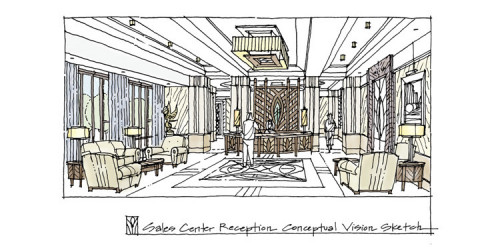
The secret weapon in Lorenc’s arsenal is his commitment to incorporating storytelling into his designs. “In the case of Opalus, we created a visual fairy tale of good fortune and magic that was woven into the site, with fairies and art deco touches used throughout,” he says. “Our Chinese partners and their customers really get into it. But we’ve done similar storytelling in setting themes for casinos and exhibits in the U.S. and other regions.”
Lorenc believes that tons of careful research remains the key to pulling off visual storytelling of this scope. “When we start a project, we spend a lot of time learning as much as we can about the context,” he says. “We immerse ourselves in the design problem so that we develop a high-level approach. Inevitably, some of what we execute springs naturally from the native culture and environment, some of it involves inventing something new, and most of it spreads across different areas of design.”



 Twitter
Pingback: [Living] Franco Cimatti - FerrariChat.com