



Some legendary ESPN SportsCenter anchors such as Stuart Scott and Dan Patrick were known for their distinct styles and witty catchphrases, but it’s fitting that current deskman Chris Cotter doesn’t bother with building up an oversized on-air persona. Instead, he sticks to the shtick that brought him to sports broadcasting’s biggest stage: being himself.
“For me, it’s all about being true to who I was,” Cotter says.
Cotter’s broadcasting brand is his authenticity—he’s the same guy during broadcasts that he is when he’s off camera. That businesslike approach has brought him a long way. He’s been working for “the worldwide leader” in sports broadcasting since 2012.
“I felt like if I could go to ESPN and succeed there, at worst, that opens up opportunities in so many other areas,” Cotter says. “But I came here with the intention of being here the rest of my career.”
Cotter’s career is even more impressive considering its relatively late start. As a Georgia Tech undergraduate, broadcasting wasn’t even on his radar when he was studying business management. In fact, his first job in broadcasting was handling radio ad sales for 790 The Zone in Atlanta.
But one fateful evening in 1997, Cotter was invited down to the station during a nightly sports radio program, just to observe how a show was put together. That night, two of the show’s three hosts called in sick. The third host met Cotter at the station’s front door and told Cotter he was going in front of the microphone.
“‘It’s just you and me tonight,’” Cotter recalls being told. “‘For the next three hours, you and me are doing sports talk radio.’”
The morning after, Cotter had earned the station owner’s praises—and an offer to contribute on more programs. He was working on his MBA from the University of Georgia at the time, and he thought he was moving forward with his business career.
“Going back to school get my MBA was one of the best decisions of my life because it gave me a totally renewed focus on my personal life and career,” Cotter says. “I was much more willing to take chances and to embrace failure as an opportunity. That
attitude certainly helped make the decision to move into broadcasting full time an easier one.”
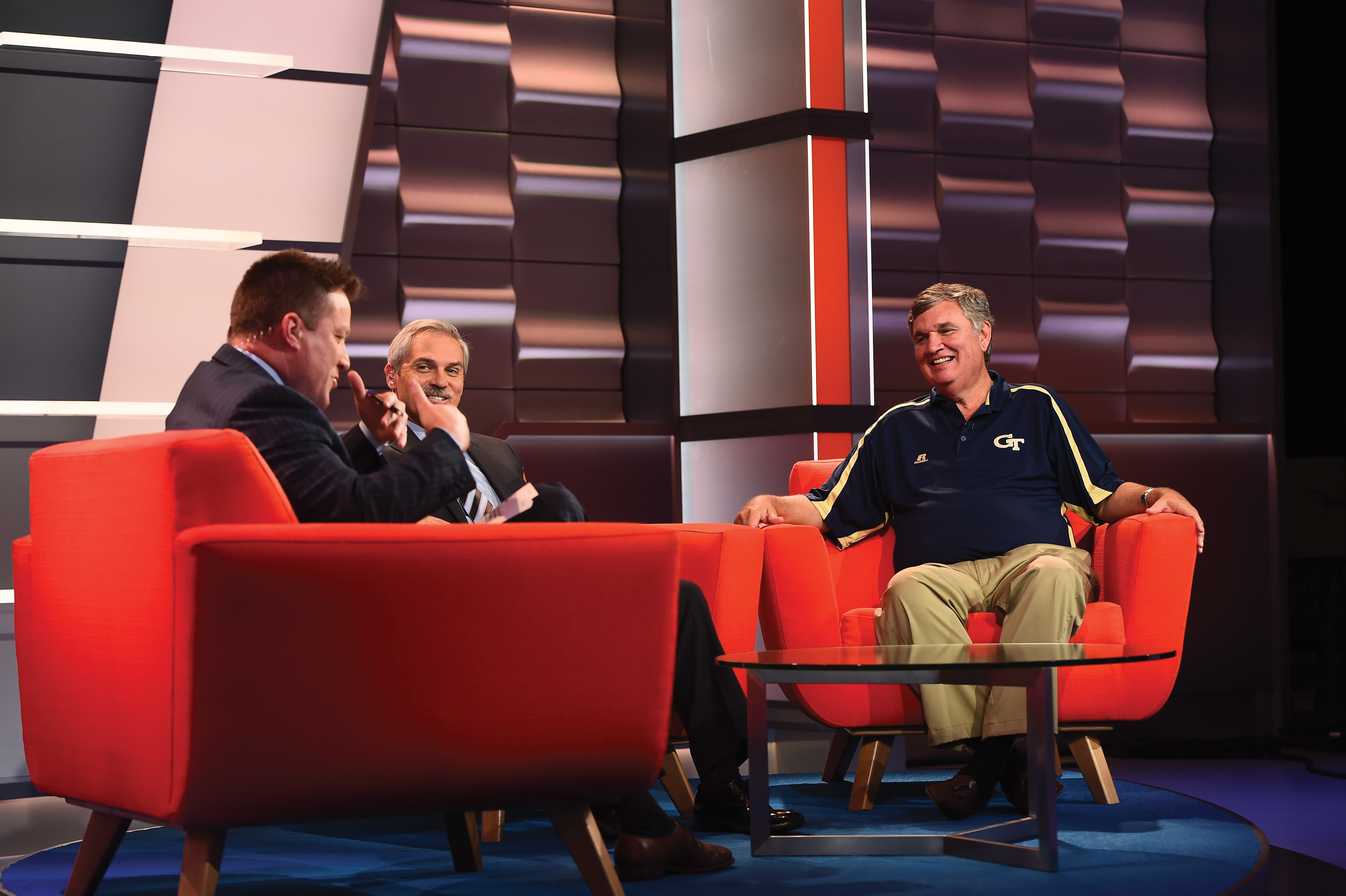
As sports talk radio grew in popularity and spread to stations across the country, Cotter had an enviable position: He worked in a large market with an entrenched following. Over time, he even started contributing segments to CNN on sports-related topics, such as Barry Bonds and baseball’s steroids scandal.
Such opportunities served as meaningful rungs on Cotter’s career ladder. But no moment was more pivotal than when, in the spring of 2005, he was fired from his gig at 790 The Zone.
“Sometimes you need to get pushed,” Cotter says, “and that really pushed me to look into some other avenues.” Cotter started to work his connections around Atlanta. Within half a year, he had an agent representing him.
“Once I made that move, all kinds of doors started opening up,” Cotter says. “I always tell young broadcasters that finding good representation is much tougher to do earlier in a career than it is later, but that’s a huge move. They have all the contacts that you don’t have. They were able to open a lot of doors for me.”
With an agent in his camp, Cotter joined SportsNet New York in 2006. In 2009, he went to Fox Business Network as an anchor, and did so expecting to stay on board for a long time.
“I probably would not have left Fox for very many places,” Cotter says. “But when the opportunity to move to ESPN came along, I jumped on it.”
Cotter says ESPN’s opening came out of the blue: His agent called with an interview lined up, so Cotter traveled up to the company’s headquarters for meetings and an audition. Two weeks later, he got an offer.
ESPN has been an experience unlike his past career stops. “Just the sheer size of the network, and navigating that, was a new challenge,” he says. But the company’s extensive operations have made it easy for Cotter to get involved in his areas of interest, specifically covering NASCAR and college football.
This fall, Cotter has moved into his largest role yet: ESPN announced in July that he would host the college football studio coverage every Saturday on ESPN2. Those opportunities are one reason why Cotter, who happens to be in a contract year, doesn’t see another employer in his future. “I’m thrilled with these new responsibilities,” he says.
Most importantly to Yellow Jackets fans, Cotter’s dueling GT and UGA degrees haven’t split his allegiances on game days. “At Georgia, I was sort of infiltrating behind enemy lines,” Cotter says. “For me, it always will be Georgia Tech.”


 Twitter